

The global strategic plan of ZERO BY 30 was launched in 2018 to end human deaths from dog-mediated rabies by 2030. The four major organizations, including the Food and Agriculture Organization of the United Nations (FAO), World Organization for Animal Health (WOAH), World Health Organization (WHO), and Global Alliance for Rabies Control (GARC), in response to this global call, came together to form THE UNITED AGAINST RABIES COLLABORATION as a way to leverage their unique strengths and expertise in the field of rabies control.
Nigeria, as one of the countries with endemic rabies, is also part of the countries working toward achieving ZERO BY 30, especially with its national strategic plan, designed in 2022, aligned with this goal. It is barely 5years away from 2030, the year targeted towards ensuring the end of human deaths from dog-mediated rabies; what is the prospect looking like?
ZERO BY 30: The goal to eradicate dog-mediated rabies by 2030
The plan puts countries at the center of rabies elimination, with coordinated global support to create national and regional rabies elimination plans, build capacity, integrate rabies control with other health initiatives, and strengthen health systems to reach the world’s most underserved populations. The plan proposed collaboration of stakeholders across countries and sectors, including public and private development partners.
The United Against Rabies collaboration expects communities, nations, and regions as well to see that they implement and own their rabies elimination plans. The plan promotes deployment of resources to ensure inclusion of dog bite treatments into health systems and increase access to dog and human rabies vaccines through a one health approach. While countries are at the frontline of leading the rabies elimination plan, the organizations in the United Against Rabies Collaboration are there to catalyze and mobilize support towards the activities geared toward achieving ZERO BY 30. The organizations developed three key objectives for this purpose;
- Effective use of vaccines, medicines, tools, and technology to reduce the risk of human rabies through expanded dog vaccinations, rabies awareness and education, and increased access to health care, medicines, and vaccines, especially among underserved communities.
- Develop international-standard policies and country strategies, and provide data for effective decision-making and surveillance systems.
- Adopt a monitoring and evaluation system to ensure sustained commitment of every involved stakeholder and also assess impacts.
What makes Rabies that important?
Rabies kills more than 59,000people in over 150 countries every year, according to the report of the United Against Rabies Collaboration. While the disease itself is 100% preventable, it is nearly always fatal once symptoms appear. With over 150 countries currently affected, it is just very important to make rabies elimination a global emergency, especially as many of these countries have underserved communities where rabies data is lacking, rabies awareness is low, healthcare is inaccessible, and vaccines are not available.
“Rabies kills more than 59,000people in over 150 countries EVERY YEAR”
The endemicity of rabies is high among poor and rural communities, especially in Africa and Asia. Rabies is a neglected tropical disease that is caused by a lyssavirus and spreads via bites and scratches from infected animals. Dogs are mostly responsible for 99% of human cases, and it presents with symptoms such as hallucinations, hydrophobia, hyperactivity, paralysis, coma, and death. Over 40% of rabies deaths occur in children under 15years of age, and lots of people are dying due to limited awareness and lack of rabies disease prevention and control in dogs. Despite the fatal nature of this disease, it is preventable by simple vaccination of dogs and simple post-exposure prophylaxis following an exposure.
What is the situation report of Rabies?
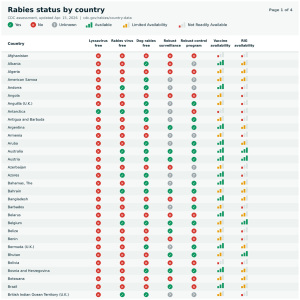
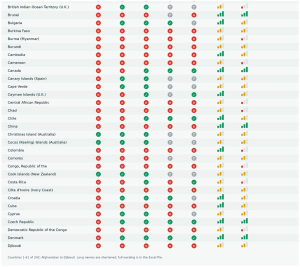
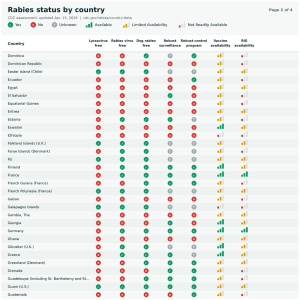
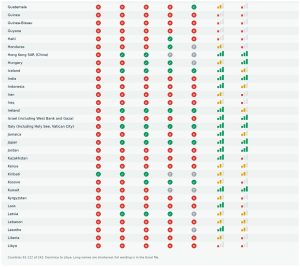
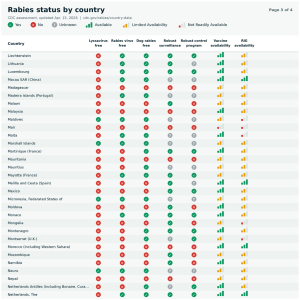
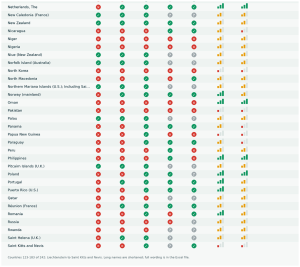
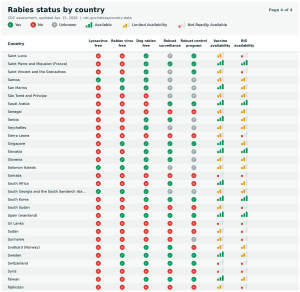
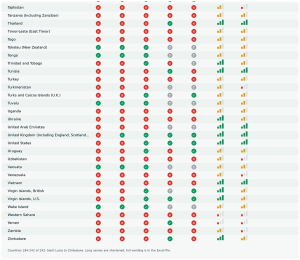
The report of all countries as of April 2026, published on the CDC website, was extracted and represented below;
Where is Nigeria?
Nigeria is not rabies-free, an apparent fact with no prejudice to the report of the CDC; however, what is more important is where exactly we are in the implementation of ZERO BY 30.
First, our national strategic plan for elimination of dog-mediated human rabies was designed to cover between 2022 and 2026. The plan was designed by the Federal Ministry of Agriculture and Rural Development, federal ministry of health and federal ministry of environment as a multidisciplinary and multi-sectorial Nigeria One health collaborating ministries plan. It outlines plans towards intervention, control, and eventually eliminating the scourge of rabies from both human and animal populations in the country.
The national strategic plan is detailed in highlighting the challenges and limitations, identifying the gaps, recognizing the needs, understanding the technical players and stakeholders, and designing the budget to achieve the results. However, the report on CDC says the output so far showed that we do not have a robust plan, nor do we have robust national surveillance, which is more of a reflection that our national strategic plan implementation is defective.
In corroboration, our SARE score has stood at 1.5 since 2022. SARE, which means Stepwise Approach towards Rabies Elimination, is an assessment component used by the Global Alliance for Rabies Control to grade a country’s present-day rabies situation. With a score of 1.5, it shows that Nigeria still stands between assessment and strategic planning, which is between stages 1 and 2 of the stages 0 -5 towards achieving a country free from dog-mediated rabies transmission.
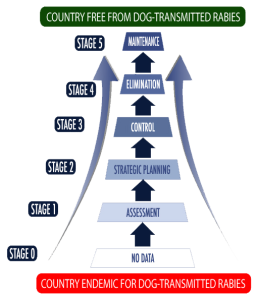
Second, the reality of the field speaks plainly that we might probably have been generously given the 1.5 SARE score, as so many indices point to the contrary: we have not fully satisfied stage 0 – stage 2. We lack reliable, up-to-date data, and our data collection system to monitor rabies disease reporting is either dysfunctional or defective. The absence of enough data makes surveillance and rabies assessment quite abstract, and those in the field do not have enough resources to measure, assess, and attend to the quagmire of dog-mediated rabies disease in Nigeria and across various communities.
Third, the various problems of rabies being reported in the media and some unreported ones periodically are exposing our ineffectiveness in being strategic as a country towards rabies elimination. We do not have a coordinated implementation of the national strategic plan, and it is reflected in some of the situations prevalent among us.
The availability of dog rabies vaccines and human PEP is very much limited, with a lot of rural and semi-urban communities not even having enough access to any of those. In places where they are available in limited quantities, the cost of a rabies vaccine for dogs is averagely 10,000naira (~8$), while Rabies Immune Globulin/PEP human rabies vaccine cost is averagely 25,000naira (~21$) for a single dose which is not affordable for most of the people as report shows about 63% of Nigeria’s population (about minimum 139 million people out of over 200million) are multi-dimensionally poor.
The level of awareness and education is relatively low, with campaigns only being loud during rabies awareness periods like September 28 (World Rabies Day) and times when there are reports of rabies incidence or dog bites that make it to news media. Most of the suspected rabies cases are going unreported, with neighborhoods and communities losing their dogs and people to suspected rabies cases. The underreporting of suspected rabies incidences shows a large gap in communication and surveillance in Nigeria’s animal disease reporting system.
“Most of the suspected rabies cases are going unreported”
The human health sector has little or no practical collaboration with the animal health sector to forge a solid alliance towards the prevention and control of rabies. Most citizens of Nigeria do not even have the correct knowledge of where to go in cases of dog bites and what to do. The knowledge gap is worsened by the disregard for capturing suspected dogs for veterinary investigation, as dog bite victims are prioritized by being taken to any available human health center, not necessarily a hospital, and not all these centers have adequate knowledge of what should be done in dog bite cases.
The interventions that come into play have always been inconsistent. Activities like mass dog vaccination barely capture the recommended 70% of the dog population; outreaches and campaigns, as well as media awareness and education on rabies, are not adequate. The sustainability of these activities is always short-lived because of ineffective strategic planning, poor funding, and lack of expansion, especially to rural and poor populations. Government policies are not championed effectively, and collaboration across public and private sectors to integrate the objectives of ZERO BY 30 is weak.
How close is 2030?
Nigeria, a rabies-endemic country and the most populous country in Africa, has a very poor rabies control strategy with a score of 1.5 out of 5 based on the SARE. Our review reveals that, despite the strengths and available opportunities to achieve rabies control in Nigeria by 2030, the weaknesses and challenges will make the attainment of ZERO BY 30 very difficult or impossible. Nigeria’s best-case scenario by the year 2030 is SARE stage 3-4 (control-elimination) out of 5. Otherwise, the rabies control program might not surpass SARE stages 2-3. Abubakar et al. 2023.
ZERO BY 30 was launched in 2018; a 12-year target goal to eliminate and keep dog-mediated rabies completely under control across the world. You can see the standings of all countries in the world in our charts above. However, how close is 2030 for Nigeria to move from 0–5?
Our current standing shows that we have a National Strategic Implementation Plan, so the problem is not that we do not know what to do, but that we have not been able to do it.
How long do we have to progress in implementing the content of our strategic planning effectively, so we can start getting expected visible results?
The question is whether we have enough time to catch up with performing countries between now and 2030, going by the pace with which we have come this far.
Nigeria is lagging, but we have a chance and leverage.
Nigerian animal health professionals- the Veterinarians and Veterinary paraprofessionals- have proven time and again that they are able to move Nigeria out of the rabies endemic country category and ensure dog-mediated rabies deaths come to an end. Every World Rabies Celebration and beyond has proven that the animal health community in Nigeria has more than enough capability to deliver ZERO BY 30.
These professionals use their resources to carry out as much as they can to ensure that some of the objectives of our rabies elimination plan are carried out. They engage stakeholders from time to time; they carry out rabies education and awareness, mass dog vaccinations, and other activities. The little that has been credited to Nigeria so far has been as a result of their activities, which most of the time have been independent of the Government.
The One Health stakeholders have not been left behind; the human health sector has been doing much on educating people what needs to be done when bitten by a dog and how to ensure the victim is helped as soon as possible. They can only do little with human rabies vaccination, as the limitations of cost and availability of rabies vaccines for both humans and animals rely heavily on what the Government can do. The monitoring and evaluation system rely much on the Government. All forms of support from FAO, GARC, WHO, WOAH and others can only be fruitful and sustainable if the Government is time-conscious in its implementation and active. 2030 is only meant for those advancing in their SARE score but would just be another happy new year for others.
A Work Around The Clock
When Nigeria decides to fund and implement her National Strategic Plan for Rabies Control, it is going to be a work around the clock; if she is willing to achieve ZERO BY 30.
“When Nigeria decides to fund and implement her National Strategic Plan for Rabies Control, it is going to be a work around the clock.”
A dog population census would be important to have a trackable database across all communities and not just the urban areas. This would make a lot of policies come into full implementation and strong enforcement. Every dog must be accounted for, with dog ownership becoming a serious responsibility that cannot be taken lightly.
Accessibility to vaccines across both rural and urban communities would close the gap for underserved populations. The mass dog vaccination programs would be required for an extended period of time, with mobilization and support for field officers such as enumerators and inoculators, and, as such, real-time data capture of every community. The accessibility to vaccines would impact the incidence of rabies infection among dogs, as there would be no excuse as to why dogs are not vaccinated and when due.
Human post-exposure rabies vaccine and immune globulin would have to be readily accessible and available, especially across all primary healthcare centers with storage facilities to support them. Training and capacity development programs would be required for community health workers and community animal health workers to work hand in hand and also carry out routine extension services in the rural communities to ensure grassroots impact and sustained prevention and control.
All stakeholders in the One Health sector have a lot to do working with the United against Rabies Collaboration, the Government, and other relevant organizations. Their activities would include providing technical as well as professional input and expertise, conducting baseline surveillance of rabies in the animal and human health sector, conducting progress assessments that are independent and critical to assess every program and objective being carried out on a national scale, and giving recommendations from time to time based on their findings to ensure sustenance and maintenance of elimination and control of dog-mediated rabies.
Most importantly, ZERO BY 30 must become a national emergency for the government and a personal affair for the stakeholders such that what is left of time between now and 2030 would see us working around the clock.
Dr. Makinde
Minna, Niger State
vetmakinde@gmail.com
Opinions strictly represent the position of our contributors, not necessarily our organisation.
We appreciate our contributors, and we will like to publish yours. Kindly send an email to vetcasttv@gmail.com to contribute your opinion.