The World Organisation for Animal Health, WOAH, has expressed serious concerns over the little or no attention being given to the consequences for animals during wildfire disasters and other risks associated with climate change around the world. Stating on her website, the Organisation said approximately 2.6 million hectares of the Pantanal go burned by wildfire in 2024 and estimated 335 million hectares burned worldwide in 2025.
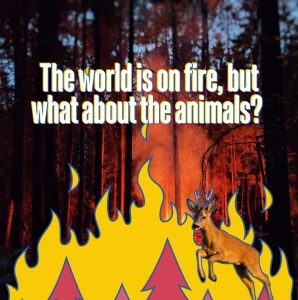
While the severe consequences for animals had been threatened livestock production, destruction of wildlife habitats and displacement of rural livelihoods, not much has been done to focus on these severe impacts across the continents of the world.
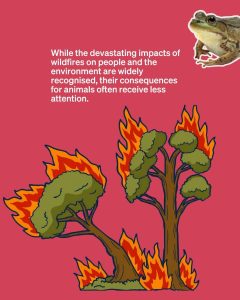
The organization further referenced the State of the World’s Animal Health 2026 report saying the world is facing increasingly complex animal health risks driven by climate change, shifting ecosystems and growing pressure on veterinary services. WOAH says building resilient veterinary services is therefore not only an investment in animal health, but also an investment in preparedness for the climate and environment related emergencies that are becoming more frequent and more complex.
The major gap identified by WOAH is that the integration of Veterinary services into the national disaster and emergency management systems is insufficient in many countries. Veterinary services are meant to be included strongly before, during and after emergencies so as to ensure that animal health and welfare are systematically considered as part of disaster risk reduction and response.
Citing Australia and Brazil as examples, veterinarians are integrated into the emergency animal management and through preparedness, response and recovery planning; they have been able to support animal welfare, livestock protection, and community resilience during bushfires and other natural disasters. They have also being able to offer a critical role in wildlife rescue, emergency treatment and rehabilitation which shows the relevance of veterinary expertise to disaster response.
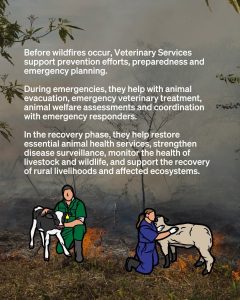
Countries of the world must understand that protecting animal health and welfare during wildfires and other natural disasters strengthens food security, safeguard biodiversity, supports livelihoods and reinforces community resilience especially as humans, animal and environmental systems are interconnected.
The organization encourages her members to ensure adoption of a national framework that integrate animal health and welfare into their wildfire emergency systems, strengthen collaboration between veterinary services and other relevant partners, invest in resilient veterinary services that is capable of responding to climate and disaster related emergencies, and promote preparedness measures that protect domestic animals, livestock and wildlife while supporting resilient communities.
This report was extracted from the website of the World Organisation for Animal Health and full article can be read here.